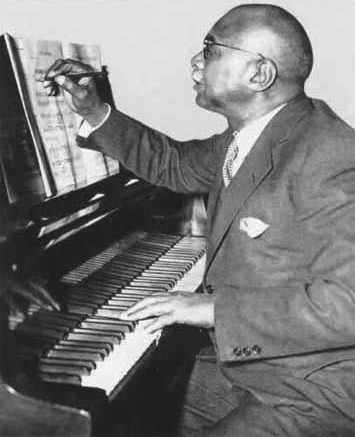
Taking root from field hollers, work songs, and spirituals, the blues emerged at the turn of the 20th century. Although it is difficult to pinpoint the exact moment when the genre began, many have credited W. C. Handy as the “father of the blues.” In 1892, Handy traveled to St. Louis, a hub for Black music, with hopes of finding work as a musician. Although Handy spent a relatively short time in St. Louis, the experiences and struggles he faced there influenced his most important composition. In 1914, Handy’s most famous piece, “St. Louis Blues,” became the first published Blues song. The song quickly gained international attention and put St. Louis and Missouri on a global map. Handy served as an influential figure for other aspiring Black blues artists as they embarked on their musical journeys searching for opportunity, fame, and freedom.
Many blues musicians of the time did not reap the same benefits or gain recognition for their contributions to music as their white counterparts. Handy’s “St. Louis Blues” has been interpreted by numerous singers and earned him millions in royalties. While “St. Louis Blues” shaped the genre and continues to influence popular music today, the song also represents the city’s vital role in the development of American music in the 20th century.