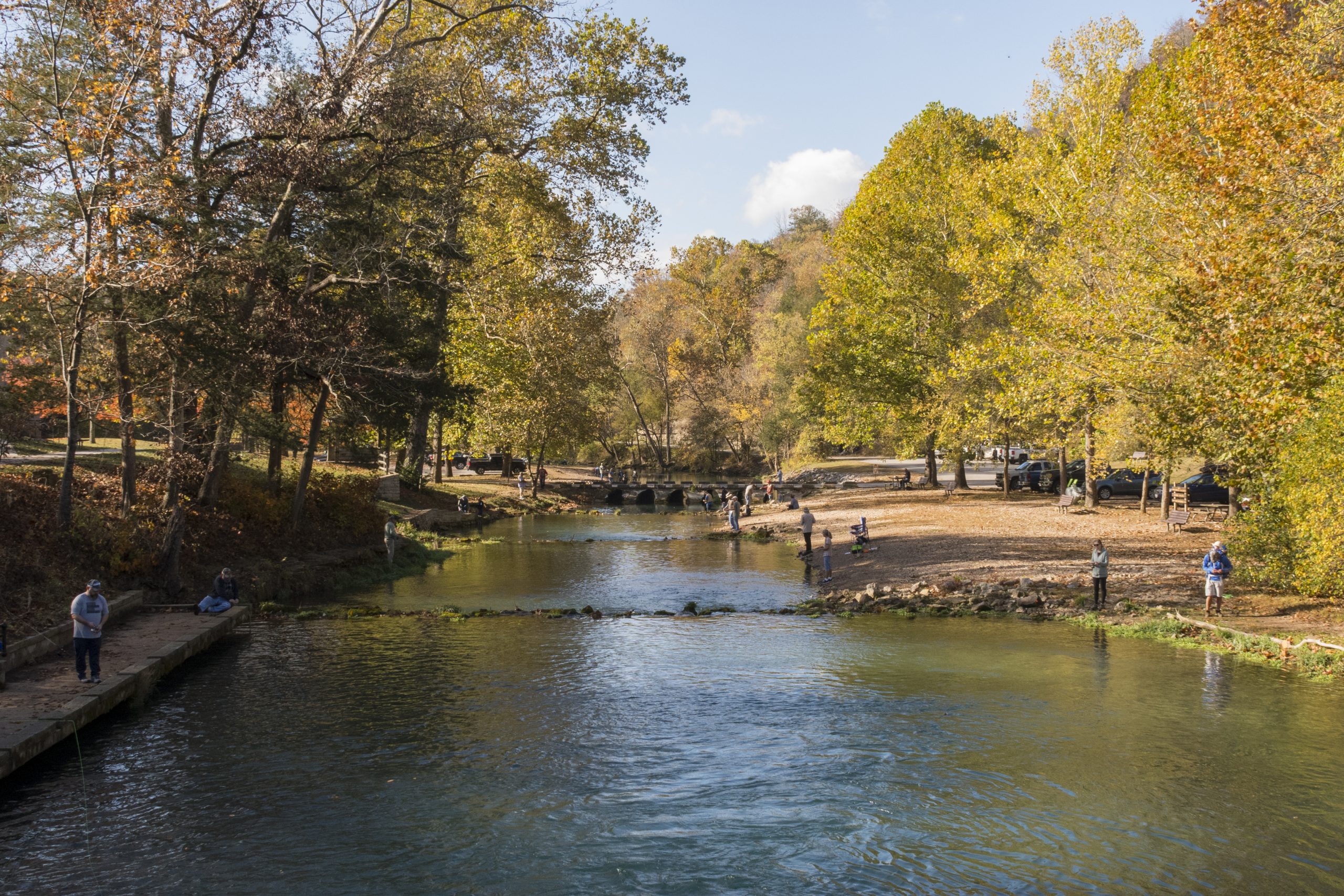
This photograph features the banks of Roaring River State Park lined with people fishing for trout, highlighting the popularity of the park and pastime.
Roaring River State Park is best known for its clear streams stocked with Rainbow Trout from its onsite fish hatchery. The fish hatchery was constructed in 1910, making it one of the oldest still operating in Missouri. It sits at the head of Roaring River near the spring, which is Missouri’s 20th largest, with an average discharge of more than 20 million gallons of water per day. The hatchery has dozens of rearing units that help raise trout in different developmental stages from birth until they are released.
Roaring River State Park is also known for its historic landscape, which visitors continue to enjoy. In the 1800s, the area’s rugged terrain hid Civil War guerilla fighters, bandits, and outlaws, who were nourished by the crystal blue Roaring River Spring. Today, hikers explore that same challenging landscape along the seven hiking trails covering over 10.8 miles of the park’s territory.
The park land was donated by St. Louis businessman and traveling salesman Thomas Sayman, who wished for the state to buy the property from him. Citing a lack of funds, the state refused the purchase, and Sayman donated over 2,000 acres of land. The area was established as a State Park in 1928, and in the 1930s Civilian Conservation Corps workers built up the bulk of the park’s infrastructure, including Camp Smokey, which is still available as a group site.
In 2020, during the Covid-19 pandemic, Roaring River attracted over 1 million visitors and had over 74,000 overnight guests.