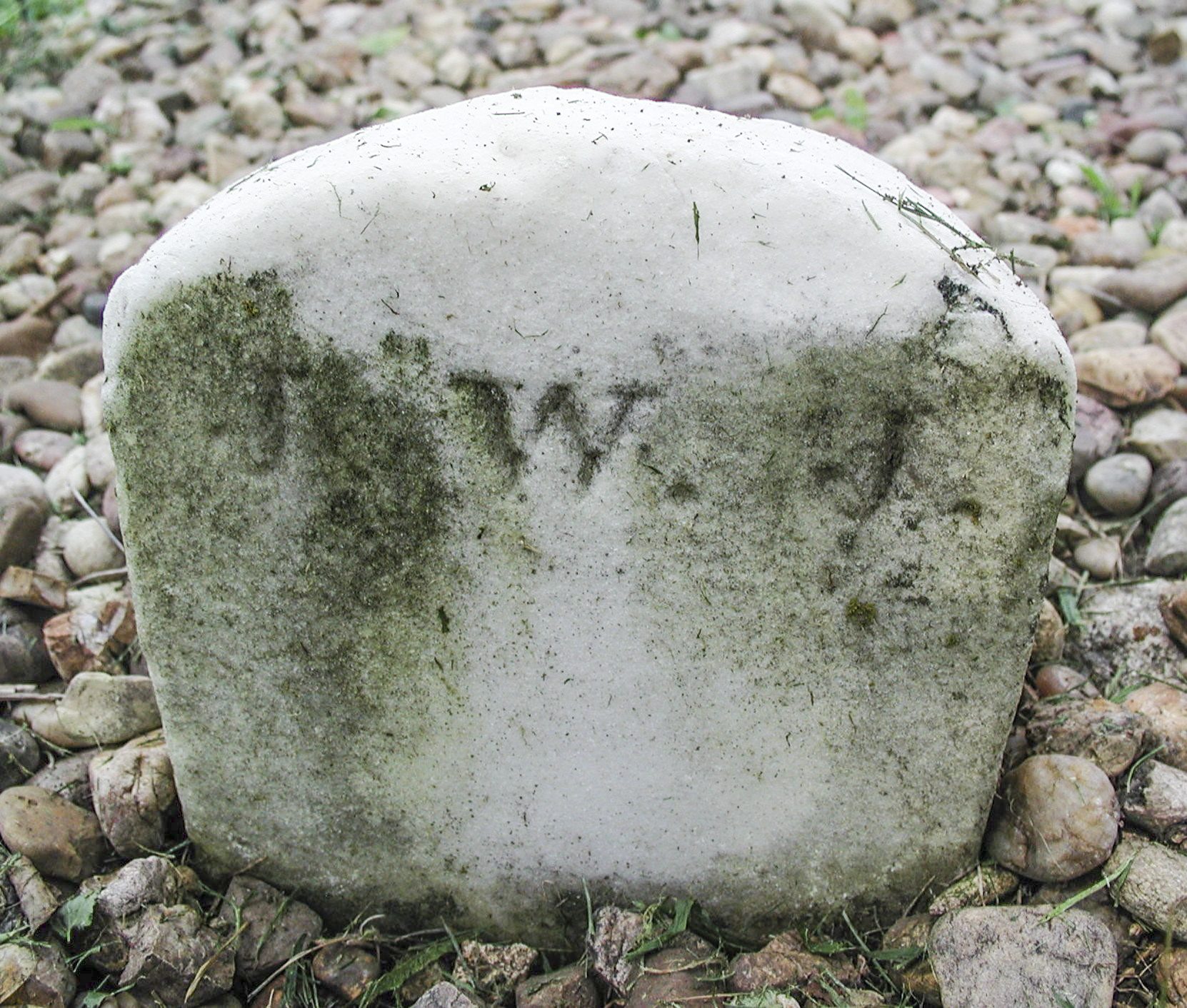
This footstone bearing the initials J.W.J. is from the original 1882 gravesite of Jesse James at his family’s farm outside of Kearney, Missouri. Jesse Woodson James was born in Clay County, Missouri, on September 5, 1847, the second of three children of Reverend Robert and Zerelda James. Jesse’s father died in the Gold Rush when he was three years old, and his mother eventually remarried Dr. Reuben Samuel, with whom she had four additional children. The family cultivated the modest James farm with the labor of a small enslaved workforce.
Jesse’s older brother Frank served in the pro-secession Missouri State Guard and later various pro-Confederate guerrilla bands. Jesse followed Frank into the ranks of the Bushwhackers in Spring 1864. Jesse and Frank James, along with other former Bushwhackers, continued their fight against their wartime enemies after the war. The self-styled bandits regularly targeted banks and trains, which they viewed as symbols of their Republican oppressors. They were interested in material gain, but they often chose their targets to settle old political scores as well. They also continued to rely on aid and protection from the same network of civilian households that had supported their guerrilla activities during the war. The James-Younger Gang’s daring robberies brought Jesse James into the national spotlight and earned Missouri the reputation as “The Bandit State.”
Fellow gang member Robert Ford killed Jesse James to claim reward money on April 3, 1882. James was initially buried in the yard of his mother’s house, but his body was later moved to the Mount Olivet Cemetery in Kearney and a new headstone erected. The original footstone lay buried on the James Farm until it was unearthed in 1978.